
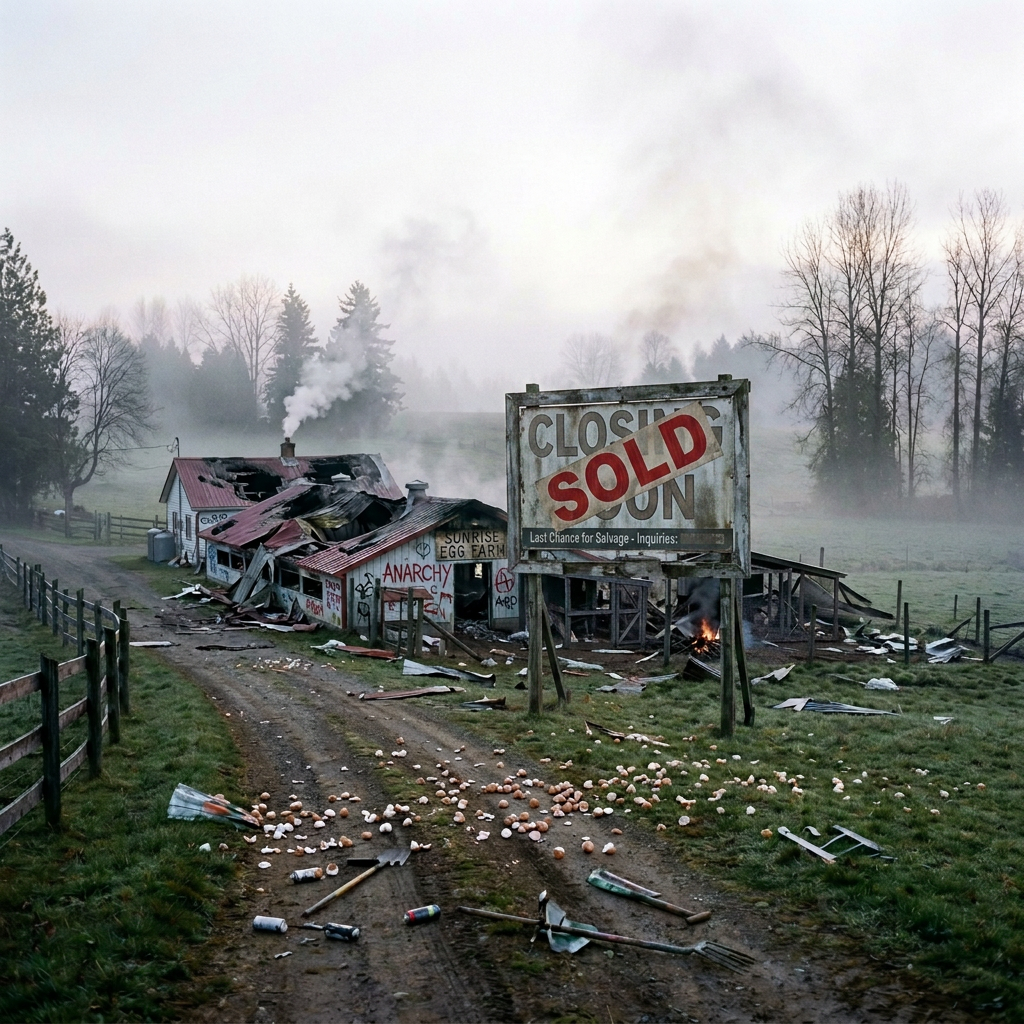
For decades, Canadians have been told that the country’s egg supply management system exists to protect family farms and ensure food safety. Production is tightly controlled through provincial marketing boards and national coordination, but many observers and independent farmers argue that the system has drifted far from that goal.
What we once called the Egg Marketing Board has been renamed deceitfully to the “Egg Farmers of Canada. Bullshit I say. Call it for what it truly is – Big Agra Farmers of Canada! Instead of nurturing diversity and resilience, they say it now functions primarily to preserve the value of quotas held by established players, while treating would-be new entrants as outsiders. The cost of quota can reach hundreds of thousands, even millions of dollars, creating a barrier that many simply cannot cross. The result is that many pasture-based, regenerative, or rotationally grazed farms remain small, not by choice but by force of policy.
At the same time, consumers who want eggs from farms that prioritize soil health, outdoor access, or alternative management systems often find few options. Critics also point to a lack of transparency. Labels can sound reassuring yet provide limited practical insight into how hens are actually raised.
The most pointed critique is political in my opinion. Many believe that successive governments of different political stripes have chosen not to seriously challenge a system that serves powerful fascist stakeholders. In my view, when government aligns too closely with well-funded industry organizations, the balance tilts away from the public interest. Egg marketing boards flatly reject this, insisting that the system prevents instability and maintains high standards. I call bullshit. It’s their attempt to squeeze out the smaller family farms.
The deeper question, though, may be whether a modern food system should prioritize protecting a closed structure or fostering open competition and innovation. The call from critics is not to eliminate standards or food safety, but to open space for independent farms to compete, for consumers to have genuine choices, and for policy to be shaped by broader public interest rather than by those who already hold power. Whether one agrees or not, the debate underscores a basic principle. People deserve clear information, fair access to the marketplace, and policies that are open to scrutiny.
My personal decision is to eliminate purchasing these factory products, pay maybe a little more and not sacrifice quality for price. At the same time, I’ll be supporting the smaller farms. It is my act of revolution. Let it be yours too,
The Scarecrow Video…